Trust is a big part of caregiving. So is independence.
When someone needs help at home, family members and caregivers may naturally become more involved with errands, paperwork, appointments and everyday routines. But helping someone should never mean taking control of their money without permission.
Elder financial abuse happens when an older adult’s money, property, benefits or other assets are misused, stolen or controlled improperly. It can involve a stranger, but it can also involve someone the person knows and trusts.
At Pristine Home Care, dignity is not just about how someone is cared for. It is also about respecting their voice, choices, boundaries and independence.
Key Takeaways
- Elder financial abuse can involve theft, manipulation, unauthorized transactions, misuse of benefits or pressure involving financial and legal documents.
- One unusual purchase or transaction does not automatically prove abuse. Families should pay attention to unexplained changes, inconsistencies and patterns.
- Financial exploitation can involve strangers, scammers, acquaintances, relatives or caregivers.
- Caregivers can help protect clients by respecting financial boundaries, documenting appropriately and reporting concerns through the proper channels.
- Pennsylvania operates a 24-hour statewide helpline for reporting suspected abuse, neglect, abandonment or exploitation.
- If someone is in immediate danger, call 911.
What Is Elder Financial Abuse?
Elder financial abuse is the illegal, unauthorized or improper use of an older adult’s money, property, benefits or other financial resources.
It can be obvious, like taking cash from someone without permission. It can also be much harder to recognize.
The National Institute on Aging identifies examples of financial abuse that include forging checks, taking retirement or Social Security benefits, using credit cards or bank accounts without permission, and improperly changing names on wills, bank accounts, insurance policies or property titles.
The Pennsylvania Department of Aging also identifies financial exploitation as a form of elder abuse.
That distinction matters because financial exploitation of elderly adults does not always begin with a dramatic event. Sometimes the first clue is simply that something does not add up.
How Big Is the Financial Exploitation Problem?
National fraud data gives families a reason to pay attention without assuming that every financial mistake is abuse.
According to the FBI’s 2025 Internet Crime Complaint Center report, 201,266 people aged 60 and older submitted complaints to IC3 in 2025, a 37% increase from 2024.
Reported losses among this group reached $7.748 billion, a 59% increase from 2024. The FBI reported an average loss of $38,500, while 12,444 complainants aged 60 and older reported losing more than $100,000.
Complaints and Reported Losses Among Adults 60+
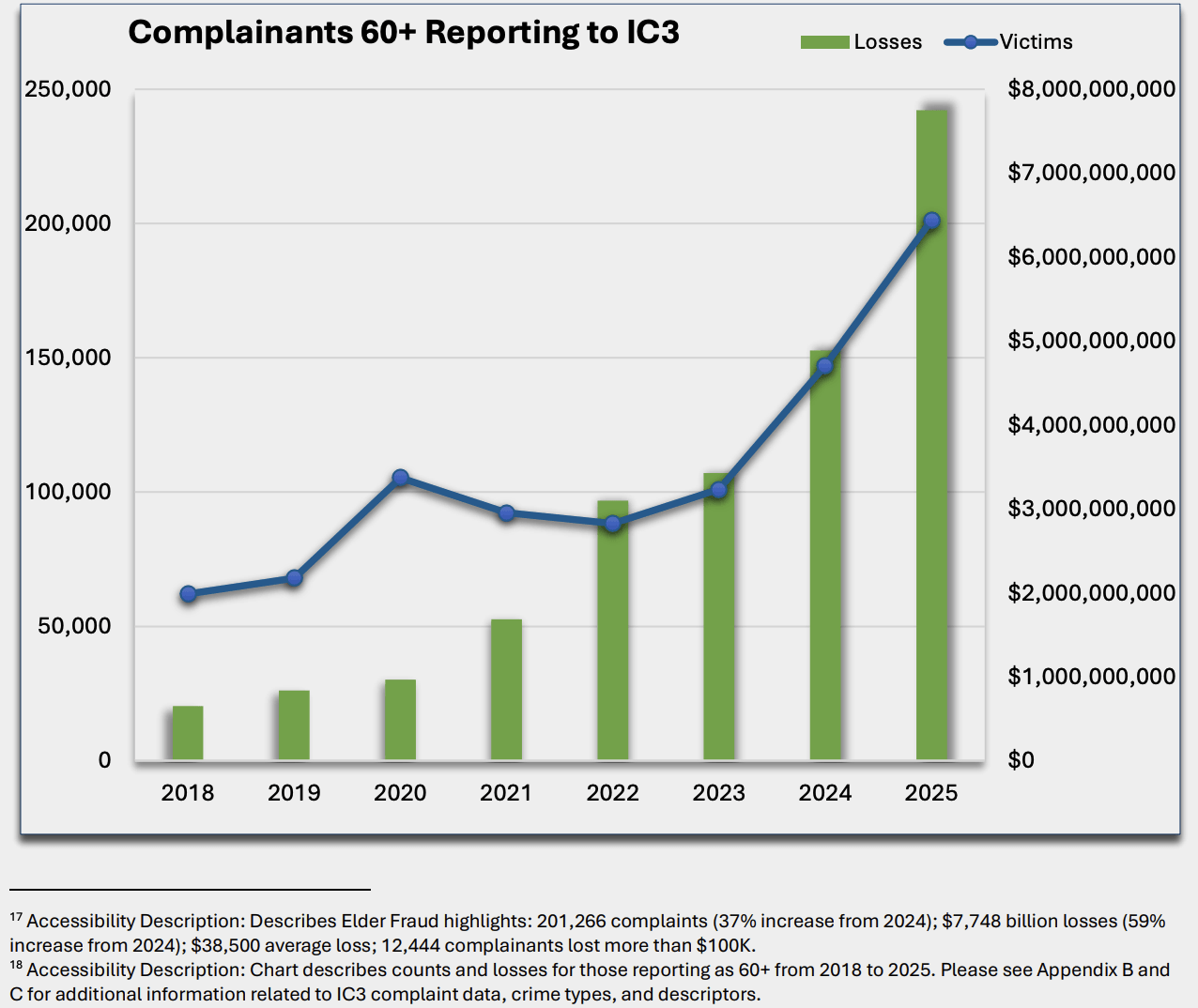
Source: FBI Internet Crime Complaint Center, 2025 IC3 Annual Report, p. 44.
Important context: These figures cover internet crime complaints involving adults age 60 and older nationwide. They should not be interpreted as statistics specifically about caregivers, home care agencies or home care fraud.
The takeaway is not that families should become suspicious of everyone around an older loved one. It is that unusual financial activity deserves attention, questions and, when appropriate, action.
What Are the Warning Signs of Elder Financial Abuse?
Warning signs can include unexplained withdrawals, missing property, unpaid bills, sudden financial changes, unusual pressure involving money or important documents being changed without the older adult’s clear understanding or authorization.
One sign alone may have an innocent explanation. Several unexplained changes, particularly when paired with secrecy, pressure or fear, deserve a closer look.
1. Unexplained Bank Withdrawals
An unfamiliar ATM withdrawal, transfer or check may be worth asking about, especially when it becomes a pattern.
The goal is not to immediately assume wrongdoing. Start with the facts and determine whether there is a reasonable explanation.
2. Bills Suddenly Stop Getting Paid
An older adult may have adequate financial resources but suddenly have overdue utilities, rent, insurance or other essential bills.
The National Institute on Aging identifies unexpected financial losses and unpaid bills despite adequate resources as possible warning signs of elder abuse.
Again, an overdue bill does not prove someone is stealing. It tells you there may be something worth looking into.
3. Money or Valuables Go Missing
Cash, jewelry, electronics, checks or other belongings disappearing without explanation can be a red flag.
This is where good communication matters.
Ask before assuming. Document before accusing.
4. Someone Suddenly Has Unusual Control Over the Person’s Money
Pay attention if someone begins restricting an older adult’s access to their own financial information or insists that nobody else should be involved.
Providing help should still leave room for dignity, transparency and the person’s choices whenever they are able to make them.
5. Legal or Financial Documents Change Unexpectedly
A sudden change to a will, power of attorney, insurance policy, deed or bank account may deserve attention when the older adult does not understand the change or says they did not authorize it.
The National Institute on Aging includes improper changes involving wills, accounts, life insurance policies and property titles among examples of financial abuse.
6. A New Person Becomes Heavily Involved in Financial Decisions
A new friendship is not itself a warning sign.
Concern may be warranted when someone begins requesting money, isolating the older adult from trusted people or becoming unusually involved in banking and financial decisions.
7. Someone Pressures the Older Adult for Money or Gifts
Financial exploitation does not always involve secretly taking something.
Pressure, intimidation or manipulation can also be involved.
The Pennsylvania Department of Aging’s financial exploitation resources provide additional guidance for older Pennsylvanians and their families.
8. The Older Adult Seems Afraid to Discuss Money
Fear, hesitation or an abrupt change in behavior around a particular person can be worth noticing.
It still is not proof.
The priority should be creating enough privacy and safety for the person to speak about what is happening without feeling pressured.
Financial Safety Checklist for Families and Caregivers
Families do not need to turn the kitchen table into a fraud investigation unit. A few consistent habits can make unusual changes easier to recognize.
- Review financial statements regularly when you have the person’s permission or appropriate legal authority.
- Keep checks, identification, financial statements and other sensitive documents secure.
- Do not casually share Social Security numbers, account information or passwords.
- Be clear about who is authorized to make purchases or handle money.
- Keep receipts and appropriate records when making purchases on someone else’s behalf.
- Pay attention when an unfamiliar person suddenly requests access to accounts or financial documents.
- Ask questions about unexplained withdrawals, new accounts, missing property or unexpected changes to important documents.
- Keep caregiving responsibilities and personal finances separate.
- Report legitimate concerns through the appropriate channels rather than trying to investigate a potentially dangerous situation yourself.
These habits can help families watch for both caregiver fraud and outside scams while continuing to respect an older adult’s independence.
Can Caregivers Help Prevent Financial Exploitation?
Yes. Caregivers can help reduce risk by maintaining clear boundaries, protecting personal information, documenting appropriately and speaking up when they notice something concerning.
A caregiver may be one of the first people to notice that something has changed.
Maybe groceries that were normally paid for are suddenly not in the home. Maybe a client mentions sending money to someone they have never met. Maybe someone is repeatedly asking them for cash.
That does not make the caregiver an investigator.
It makes the caregiver an extra set of eyes.
Caregivers should follow their agency’s policies concerning client finances, purchases, documentation, gifts and suspected exploitation. They should not borrow a client’s money, mix personal funds with client funds, use financial information without authorization or agree to inaccurate records.
Those boundaries protect the person receiving care and the caregiver providing it.
For more guidance on building trust in care, read Pristine’s guide on how to be a better caregiver and its overview of the PA Caregiver Support Program.
Is Financial Exploitation Always Committed by a Caregiver?
No. Financial exploitation can involve relatives, friends, acquaintances, strangers, scammers, service providers or caregivers.
This distinction matters.
The person providing daily care should not automatically become the suspect when money goes missing. At the same time, knowing someone personally does not automatically make a financial transaction safe.
Good prevention focuses on behaviors, documentation and evidence rather than assumptions about someone’s role.
This is also where our related guide to home care fraud can help families and caregivers understand the difference between financial exploitation, suspicious activity and potential fraud in a home care setting.
What Should You Do If You Suspect Financial Exploitation?
If you suspect financial exploitation, document what you have observed, consider the person’s immediate safety and report concerns through appropriate channels rather than trying to confront a suspected abuser yourself.
Start with facts.
Write down what happened, when you noticed it and the specific information available to you. Avoid exaggerating or filling in details you cannot verify.
If you are a caregiver working through an agency, follow your organization’s reporting and escalation procedures.
In Pennsylvania, suspected abuse, neglect, abandonment or exploitation of an older adult can be reported through the 24-hour Statewide Elder Abuse Helpline at 1-800-490-8505.
Learn how to report elder abuse in Pennsylvania
Suspected internet fraud can also be reported through the FBI Internet Crime Complaint Center.
If someone is in immediate danger, call 911.
Trust Should Make Care Feel Safer, Not Smaller
Good care provides support without taking away someone’s voice.
That philosophy matters whether someone needs help bathing, getting dressed, preparing meals, running errands or simply moving through the day with a little more support.
Pristine Home Care provides non-medical personal care assistance focused on helping people remain at home with support built around their routines, preferences and dignity.
Families can also explore Pristine’s home care services and the Pennsylvania communities Pristine serves.
And because home care is personal, accountability should be personal too.
Clear expectations. Accurate documentation. Respect for boundaries. People who answer when something does not feel right.
No runaround. No guessing game.
Just care that remembers there is a whole person at the center of it.
Frequently Asked Questions About Elder Financial Abuse
What is an example of elder financial abuse?
Using an older adult’s bank account, credit card, benefits or property without authorization may be financial abuse. Other examples can include forged checks, stolen property or improper changes to financial or legal documents.
What is the difference between elder financial abuse and a scam?
Financial abuse is a broad category involving improper use or control of an older adult’s financial resources. A scam is one way financial exploitation can occur. Scammers may be strangers, while financial exploitation can also involve someone the older adult knows.
Does an unexplained withdrawal prove financial abuse?
No. An unusual transaction can have a legitimate explanation. Families should look at facts and patterns rather than treating a single transaction as proof of wrongdoing.
Can a family member financially exploit an older adult?
Yes. Financial exploitation can involve someone known to the person, including relatives, friends and acquaintances, as well as strangers and other individuals.
How can caregivers protect themselves from accusations of financial abuse?
Caregivers can follow agency policies, maintain clear financial boundaries, keep accurate records, retain required receipts and avoid using a client’s money or financial information without appropriate authorization.
Where do I report suspected elder financial abuse in Pennsylvania?
Suspected abuse or exploitation involving an older adult in Pennsylvania can be reported through the 24-hour Statewide Elder Abuse Helpline at 1-800-490-8505. If someone is in immediate danger, call 911.
Care That Protects Dignity and Independence
Home should be a place where someone feels supported, respected and heard.
If your family is exploring non-medical home care, Pristine Home Care can help you understand your options and next steps. Pristine supports individuals and families across Philadelphia, Allentown, and surrounding Pennsylvania counties.
- Looking for care at home? Complete Pristine’s New Client Registration form to start the conversation about non-medical home care and available options.
- Want to become a caregiver or get paid to care for someone you love? Visit Pristine’s caregiver application and careers page to explore the current application process.
You can also call Pristine Home Care at (215) 621-7431.
This article provides general educational information and is not legal, financial or medical advice. Eligibility for programs and services varies. If you suspect abuse, exploitation or fraud, contact the appropriate protective services, law enforcement or another qualified authority.